

cdhq.over-blog.com/
24 Janvier 2021

| Filename extension | |
|---|---|
| Internet media type | application/macbinary application/x-macbinary |
| Uniform Type Identifier (UTI) | com.apple.macbinary-archive |
MacBinary is a file format that combines the two forks of a classic Mac OS file into a single file, along with HFS's extended metadata. The resulting file is suitable for transmission over FTP, the World Wide Web, and electronic mail. The documents can also be stored on computers that run operating systems with no HFS support, such as Unix or Windows.
MacBinary was widely supported on the Macintosh and was built into most communications programs on that platform. Similar solutions were built into most data compression applications on the Mac, and although these did not require MacBinary to survive transmission across non-Mac systems, MacBinary was often added in these cases to preserve longer filenames and other features.
Download Game Extractor for free. Open and edit the archive files used in over 3200 games. Reads and writes archives used in many popular games. Great for mod development and game translations.
The dual-fork nature of the HFS system was not used on Mac OS X, and MacBinary has largely disappeared.
To extract BIN / CUE file with AnyBurn, please follow the steps, 1. Run AnyBurn, and click 'Browse / Extract image file'. Click browse button and navigate to the BIN / CUE file you want to extract, and Click 'Open' to select one of them. AnyBurn will automatically open the BIN file if CUE file is selected, and vice vesa. Iso Extractor For Mac. Download32 is source for iso extractor for mac shareware, freeware download - Aolor DMG to ISO Converter for Mac, TunesKit Free Subtitle Extractor for Mac, Amacsoft iPhone Backup Extractor Mac, Backuptrans iPhone SMS + MMS Extractor for Mac, iCoolsoft DVD Copy for Mac, etc. Download Windows 10 Disc Image (ISO File) Before updating, please refer to the Windows release.
In contrast to other computers of the era, Macintosh applications included both computer code as well as a large number of resources that were used by the operating system (OS) itself. These resources were also widely used in documents to store rich media like sounds and images. Radium 3 0 2 – multi network radio player. However, the resource system had the significant limitation that the maximum size of any single resource was only 32 kB, far too small for storing document data. To address this, Apple introduced the concept of forks, allowing any file in the filesystem to have both a resource fork and a data fork, basically separate files. The OS would ensure the two separate files were always treated as a single object, so dragging it to a floppy disk in the Finder would actually copy both files.
This presented a serious problem when the file had to be stored on other computer systems. Those systems, unaware of the fork concept, would have to store the two forks as separate files. This presented the possibility that the two would be separated at some point, or not properly recombined when they were transmitted back to the Mac. This problem led to a number of solutions that combined the two forks together into a single file, and then automatically pulling them back apart when they reached another Mac. MacBinary was one of the most popular solutions, although BinHex was also used on the UseNet, where links were not 8-bit clean. Cleaner download mac. Apple's own solutions, AppleSingle and AppleDouble, were never widely adopted in the user community.
Browser firefox mac. Mac OS X and macOS both come with a built-in compression system that can zip and unzip files. This integrated system is relatively basic, which is why many third-party apps are also available. A quick look at the Mac App Store reveals more than 50 apps for zipping and unzipping files. The file is probably an archive, application, or other binary file encoded to protect the Mac's forked file structure. To decode a MacBinary document in Mac OS, Mac OS X, or Windows, use StuffIt Expander. Simply drag and drop the file onto the StuffIt Expander icon and it will decode the file. When necessary, it will also decompress the file into a usable form.
Files encoded with MacBinary, regardless of the version, usually have a .bin or .macbinfile extension appended to the ends of their filenames. E-mail programs such as Eudora can extract and decode MacBinary mail messages. Most dedicated FTP programs for the Mac, such as Fetch and Transmit, transparently decode MacBinary files they download.
MacBinary is similar to BinHex, but MacBinary produces binary files as opposed to ASCII text. Thus, MacBinary files take up less disk space than BinHex files, but older applications and servers are more likely to corrupt them.
How to install winexe on centos 7. The first incarnation of MacBinary was released in 1985. The standard was originally specified by Dennis Brothers (author of the terminal program MacTEP and later an Apple employee), BinHex author Yves Lempereur, PackIt author Harry Chesley, et al. then added support for MacBinary into BinHex 5.0, using MacBinary to combine the forks instead of his own methods. Most terminal programs and internet utilities added built-in MacBinary support during this period as well.
Two years later it was updated to MacBinary II, to accommodate changes in Mac OS. MacBinary II remained compatible with subsequent updates of the operating system for some time. This changed with the release of Mac OS 8, which necessitated the release of MacBinary III in 1996. In the meantime, Apple itself had released the AppleSingle and AppleDouble formats, which serve the same purpose as MacBinary, but correct some problems with it.
Click on a file to download it.
| Rate Us |
Supports password-protected archives
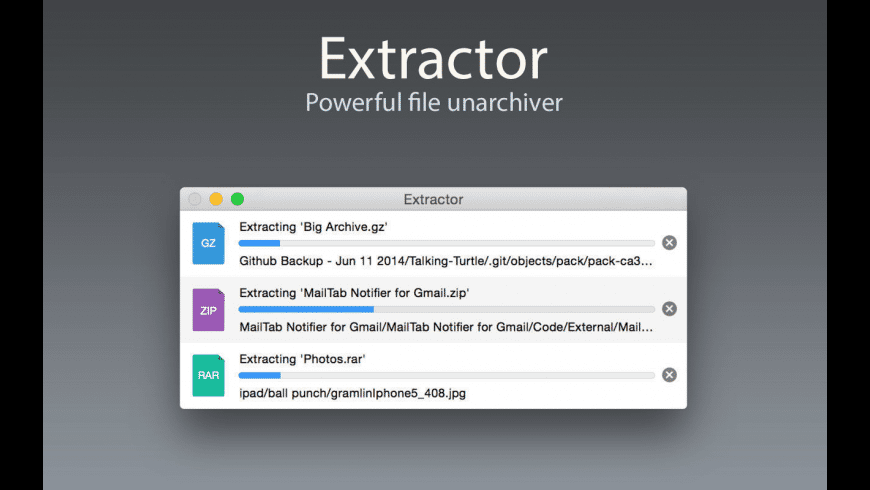
Banktivity 6 2 4 – intuitive personal finance manager login. Can unpack multi-part archives (zip.001, rar.part1, z01, etc)
Although it might sound like it, this is not the Trash. Bin is another hidden folder.
When operating systems, such as macOS — and Mac OS X before that — are constructed using a Linux system directory, certain files and folders are hidden on purpose. Almost every operating system will hide things that the majority of users don't need. It is the same as an architect and builder placing plumbing and wiring behind a wall: it looks better, and the last thing you want is to accidentally damage the operating system that keeps your house functioning smoothly.
It is enough for most people to know that the plumbing and wiring are working smoothly and that they can call a professional should something go wrong. With an Apple operating system, hidden folders and files are routes that power users take to tweak and modify a Mac, to improve how it performs, and solve any problems should anything go wrong. Can you play minecraft windows 10 on mac.
Accessing the bin folder is another way to take a look at potentially make changes to license and configuration files. Now, if you ever want to make changes to hidden files and folders without digging around in system directories, there is an easier and quicker way. Download an app like CleanMyMac X to uncover space within hard drives. Using its Space Lens feature, This program can show you what is taking up space and help you delete anything you don't need.
However, if you are keen to look under the hood manually, here is how to access the bin folder.
/usr/local/binAnother way to find the bin folder is through Terminal.
chflags nohidden ~/usr/local/binchflags hidden ~/usr/local/binOnly attempt this method if you are comfortable using the Terminal. Remember, using Terminal can make significant changes to your macOS systems and files, so only make these sorts of changes if you're confident in the inputting instructions. This way, you should have temporary access to the bin folder to make any needed changes.
Pro Tip: If you find yourself running short of storage on your Mac, clear out your downloads folder. Everything you've ever downloaded that you've not moved somewhere else or copied is sitting in that folder. Going right back to when you got your Mac. Imagine how much room that is taking up! Especially when it contains zip folders, videos, images, and app downloads.
There are many apps that allow you to gain access to hidden files, folders, and directories. One such is Daisy Disk, another CleanMyMac X. I prefer CleanMyMac better because of nice visualizations. You can click the 'Space Lens' tool and see the entire folder tree of your Mac. This reveals many hidden folders and things you may have long forgotten.
I downloaded the free version of CleanMyMac X here.
After you get the app, you need to click the 'Space Lens' tab.
From there, click on bubbles to dive deeper into folders that are sorted by colors and categories. Quite exciting, really.
That's all you need to know about finding the Bin folder on Mac. Stay tuned for more Mac tips!


/image%2F6290040%2F20210221%2Fob_3af1d0_chrome-38-for-mac.jpeg)
/image%2F6290040%2F20210221%2Fob_c2c758_buy-adobe-premiere-elements-for-mac.png)
/image%2F6290040%2F20210221%2Fob_b51ae9_download-revu-for-mac.jpeg)
/image%2F6290040%2F20210221%2Fob_ff7b20_edit-pdf-document-on-mac.png)